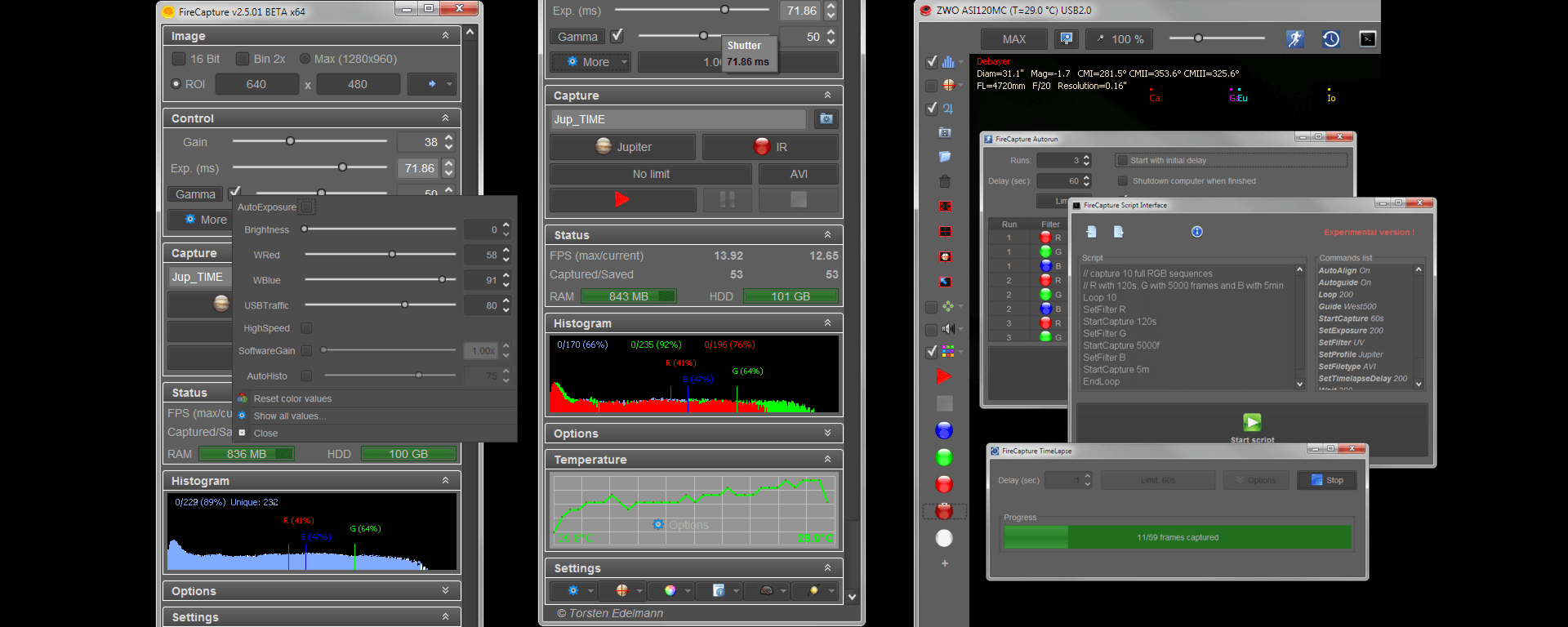
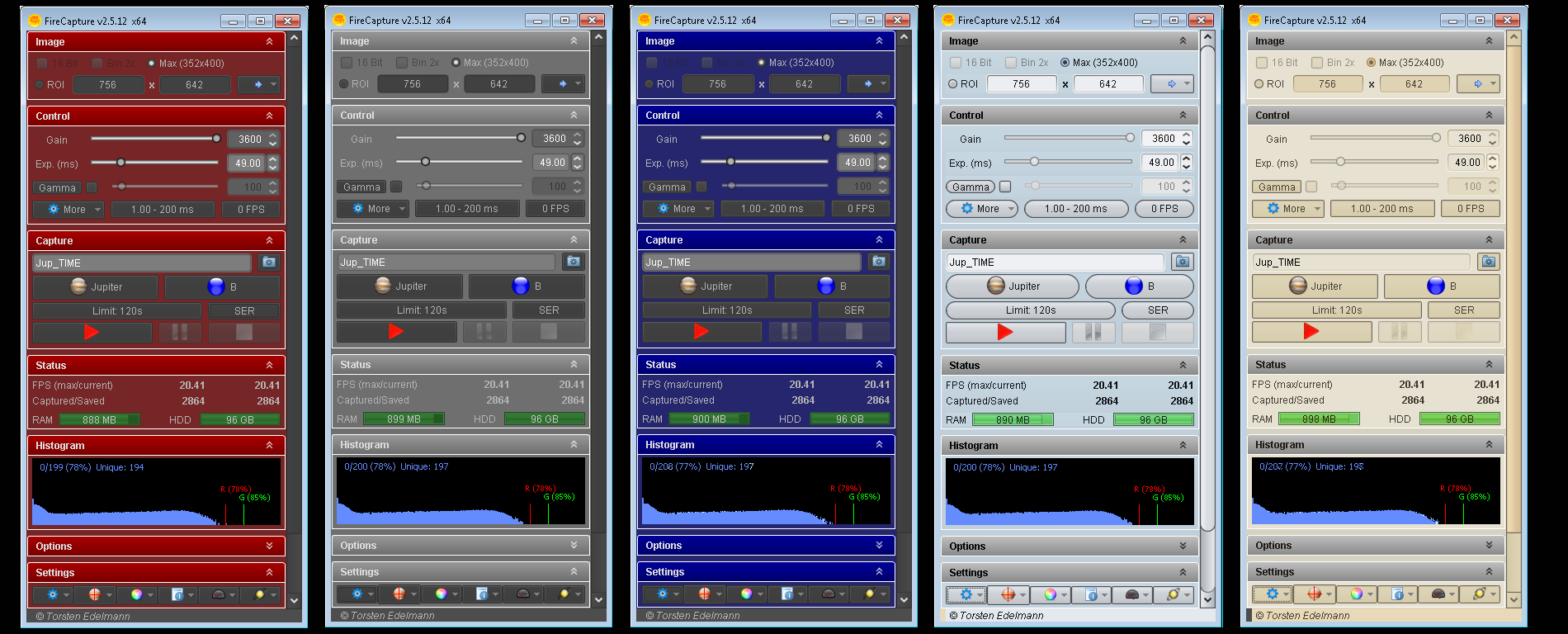
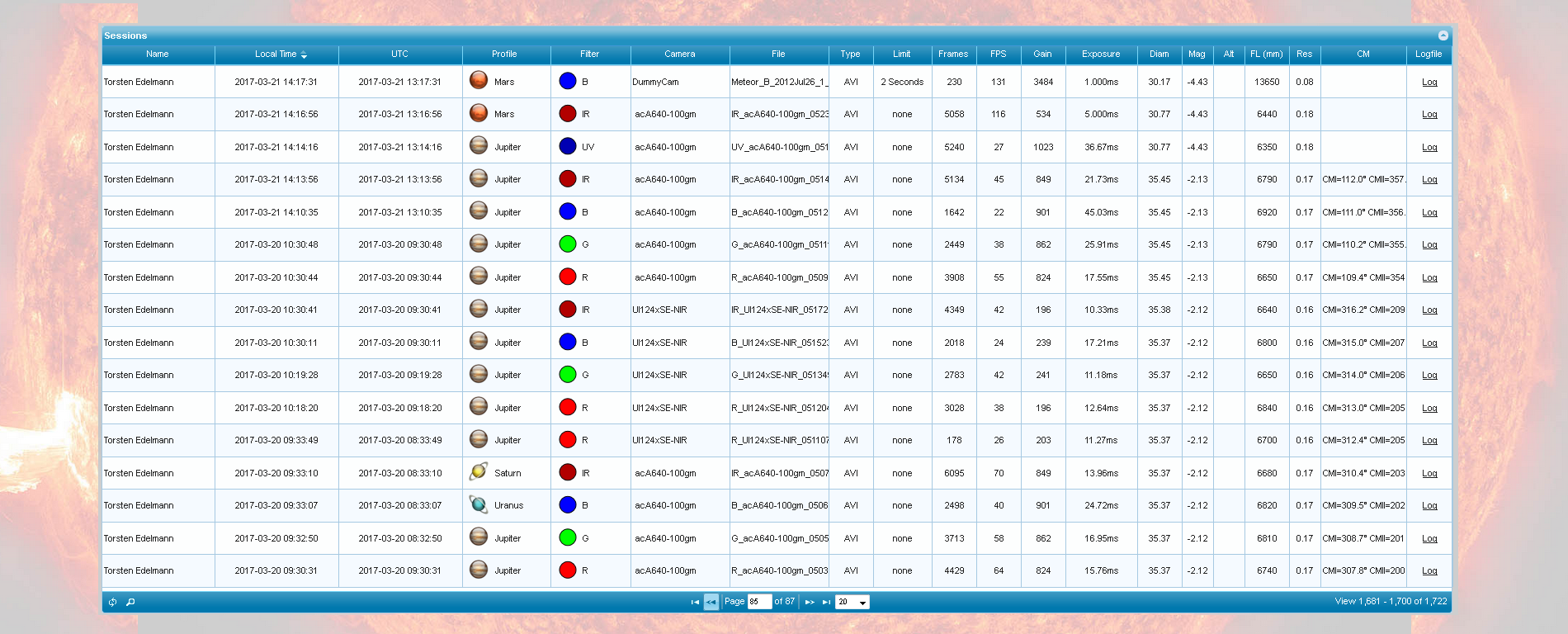
Raspberry support for FireCapture v2.6 and ZWO cameras !
| Compatibility |  FC v2.7.15 (x64) |
 FC v2.7.15 (x64) |
 FC v2.7.15 (x64) |
FC v2.7.15 (aarch64) |
|
|---|---|---|---|---|---|
 Altair Altair |
 |
 |
|
|
|
 ASCOM ASCOM |
 |
|
|||
 Basler Basler |
|
|
|||
 FLIR/FlyCap FLIR/FlyCap |
 |
|
|||
| FLIR/Spinnaker |
|
|
|||
 LUCID LUCID |
|
|
|||
 NexImage NexImage |
|
|
|||
 OGMA OGMA |
|
|
|
|
|
 PlayerOne PlayerOne |
|
|
|
|
|
 QHY QHY |
|
|
|
|
|
 Skyris Skyris |
|
|
|||
 SVBony SVBony |
|
|
|
|
|
 TIS
TIS |
|
|
|||
 Touptek/Omegon Touptek/Omegon |
|
|
|
|
|
 ZWO ASI ZWO ASI |
 |
|
|
|
|
Older Versions
Developing software is mostly fun, but it also takes up nearly all of my spare time. If you find FireCapture useful and would like to support me in continuing development you're welcome to donate a small amount of your choice.


To truly appreciate the richness of LGBTQ+ culture, one must understand the history, triumphs, and ongoing struggles of the transgender community. 🏛️ The Historical Foundation
– “Passing” as cisgender can increase safety but may erase trans identity. Some trans people celebrate “non-passing” visibility as political resistance. This internal debate is unique to trans culture.
In ballroom culture—an underground scene created by Black and Latinx trans women—we see the DNA of modern pop culture. The voguing, the “reading,” the categories of “realness” were all survival mechanisms for trans people excluded from fashion and society. Today, that culture has mainstreamed via shows like RuPaul’s Drag Race , creating a complex tension: drag is performance, while being trans is identity. Yet, the overlap remains a fertile ground for creativity.
in your workplace and everyday life.
However, representation is only one part of the equation. The transgender community also needs tangible support and resources to address the significant challenges they face. This includes access to healthcare, housing, and education, as well as protection from violence and discrimination.
: Trace the evolution of the term "transgender" from its medical roots in the 1950s (e.g., Christine Jorgensen) to its adoption as an umbrella term in the 1990s. Early Activism
While the "T" is firmly placed within LGBTQ+, the transgender experience differs significantly from that of cisgender lesbian, gay, and bisexual individuals.
To truly appreciate the richness of LGBTQ+ culture, one must understand the history, triumphs, and ongoing struggles of the transgender community. 🏛️ The Historical Foundation
– “Passing” as cisgender can increase safety but may erase trans identity. Some trans people celebrate “non-passing” visibility as political resistance. This internal debate is unique to trans culture.
In ballroom culture—an underground scene created by Black and Latinx trans women—we see the DNA of modern pop culture. The voguing, the “reading,” the categories of “realness” were all survival mechanisms for trans people excluded from fashion and society. Today, that culture has mainstreamed via shows like RuPaul’s Drag Race , creating a complex tension: drag is performance, while being trans is identity. Yet, the overlap remains a fertile ground for creativity.
in your workplace and everyday life.
However, representation is only one part of the equation. The transgender community also needs tangible support and resources to address the significant challenges they face. This includes access to healthcare, housing, and education, as well as protection from violence and discrimination.
: Trace the evolution of the term "transgender" from its medical roots in the 1950s (e.g., Christine Jorgensen) to its adoption as an umbrella term in the 1990s. Early Activism
While the "T" is firmly placed within LGBTQ+, the transgender experience differs significantly from that of cisgender lesbian, gay, and bisexual individuals.
It was back in 2008 when I got hold of a SONY newsletter announcing a new CCD sensor (ICX618) which promised fantastic sensitivity. Still working with an old webcam those days I instantly had the idea of replacing the webcam sensor with the new SONY sensor. It took weeks and dozens of emails to get the confidential spec of the new sensor. When I saw the sensitivity values it was clear: I had to have this sensor! The Basler Scout scA640 was the first machine vision camera on the market using this sensor and when I bought it the nightmare began: the included software was useless for planetary imaging and running the camera with the VRecord webcam tool was a complete PITA. Bugged by the inability to store even the basic camera settings I decided developing my own capture software.
What started as a solely private project soon turned into higher gear when fellow astronomers saw the software and insisted on getting it. I decided to make it public, included new camera interfaces and after years of continuous development FireCapture has evolved to one of the leading planetary capture tools. Developing the thing is only one part of the story: with a supportive community of users behind me I always had the feeling of someone 'looking over my shoulder' during the countless hours of programming. I can't mention all but just want to say:
Thank you guys !